When it comes to wellness, it is easy to get lost in the weeds of supplements, timing, and trendy diets. However, true performance-based wellness requires a return to the basics. We need to shift our mindset from simply “filling” the void with food to “fueling” the machine that is our body.
Here is a breakdown of the energy equation, how to manage your metabolism, and why the “weekend cheat meal” might be holding you back.
1. Build Your Foundation First
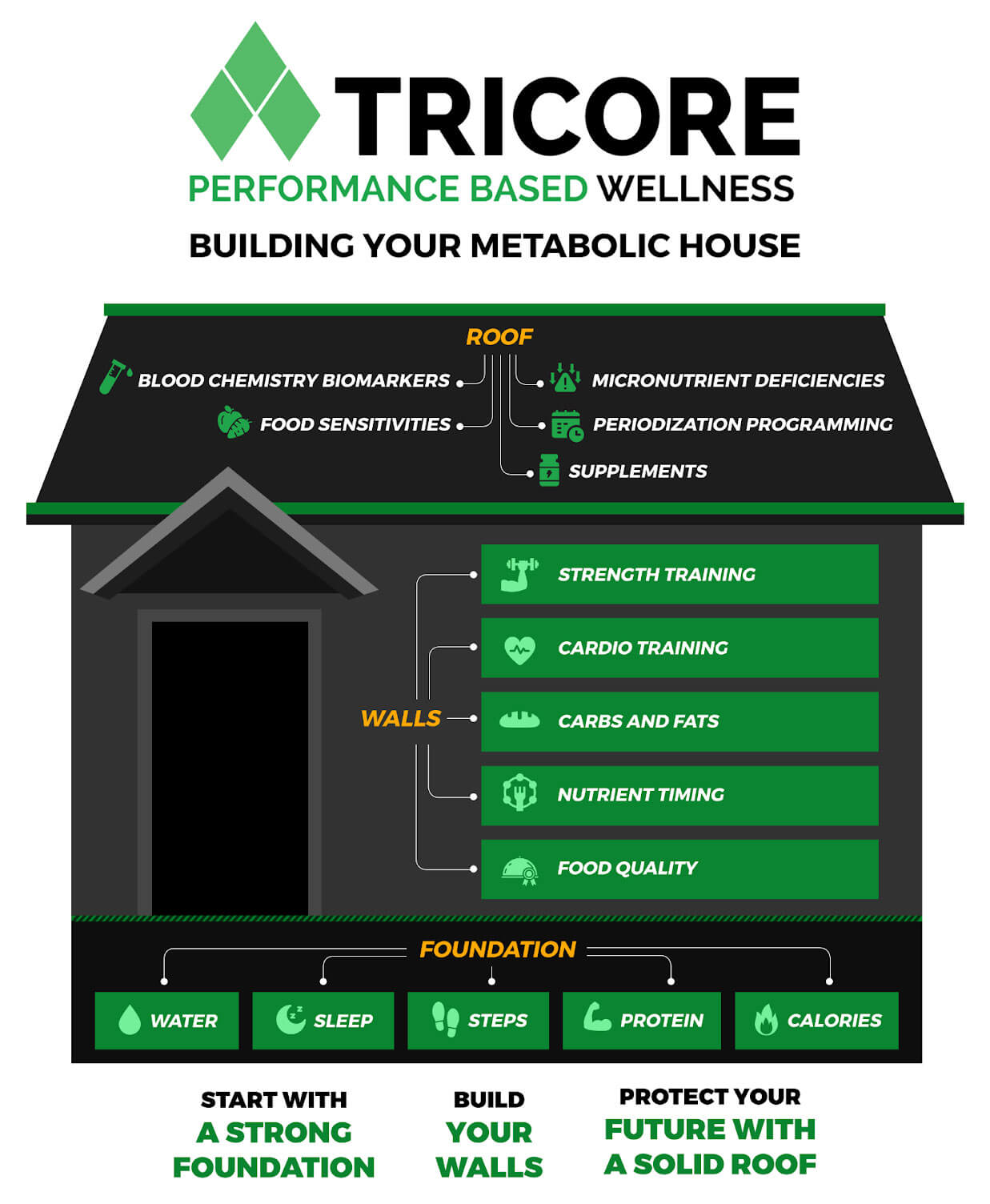
Think of your health like a house. Before you can worry about the “Roof” (supplements and micronutrients) or the “Walls” (nutrient timing and food quality), you must secure the “Foundation”.
The foundation of your wellness consists of five non-negotiable pillars:
- Water
- Sleep
- Steps
- Protein
- Calories
Only once these are managed should you worry about complex periodization or supplements.
2. The Energy Equation: Know Your Macros
Understanding calories starts with understanding macronutrients as well. Each plays a specific role in your biology:
- Carbohydrates (4kcal/g): This is the body’s primary fuel source.
- Protein (4kcal/g): Essential for repair and growth.
- Fats (9kcal/g): Vital for hormone regulation and energy storage.
This powerful knowledge can provide key insights into how best to manage your portions! And yes; fats are more than DOUBLE the amount of calories per gram (compared to proteins and carbs).
3. The Math vs. The Reality of Weight Loss
You have likely heard of the 3500 Calorie Rule. It is estimated that one pound of fat contains approximately 3,500 kilocalories. Mathematically, to lose one pound per week, you would need a daily caloric deficit of 500 kcal (500 x 7 days = 3500 kcal).
The Reality Check:
While this rule is a useful starting point, biology is not always exact. Weight loss is rarely linear because factors like water retention, hormonal fluctuations, alcohol consumption, and the metabolic changes due to aging can influence your overall rate of progress.
4. The “Cheat Meal” Trap and Weekly Balance
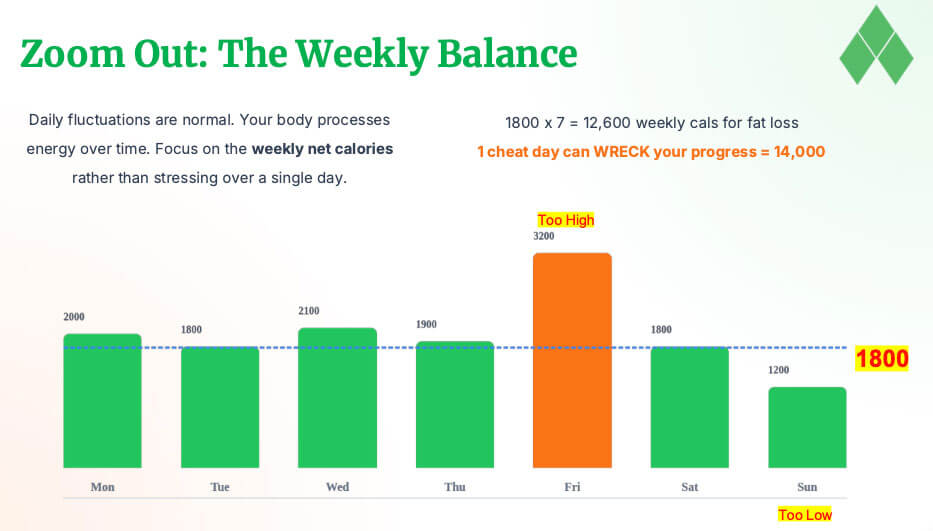
One of the biggest mistakes people make is looking at their calories on a daily basis rather than a weekly basis.
Imagine you hit your caloric deficit Monday through Friday. However, on Saturday, you have a massive “cheat day.” That single day of overconsumption can wreck your weekly net calorie balance, effectively neutralizing the deficit you created during the week.
 Shift Your Mindset:
- Stop labeling food as “Cheating”: This assigns morality to eating and often triggers a binge-restrict cycle.
- The 80/20 Rule: Instead of saving calories for a massive blowout, incorporate treats in moderation so you never feel deprived enough to binge.
5. Practical Management Strategies
You don’t always need a scale to stay on track. Here are three tools to manage your intake:
- Hand-Size Guides: Use portion control guides, such as using your palm to measure protein and your fist to measure veggies.
- Mindfulness: Slow down. It takes 20 minutes for satiety signals to reach the brain, so eat with intention.
- Food Quality: Prioritize nutrient density. Choose complex carbohydrates like sweet potatoes, quinoa, and oats, and load up on volume-heavy vegetables like spinach and broccoli
Using these tips and understanding these principles of science around calories can help you “uncover” the power of this amazing unit of energy (the calorie!).
For more information about a personalized meal plan, or if you are looking for a nutrition coach, please contact us at TriCore to schedule an Intro Call with one of our Certified Metabolic Health Coaches.
By Chris Edwards